

Area 1.
Advanced Therapies and Regenerative Medicine
At the Unit of Excellence IOBA, we investigate new strategies to treat diseases of the ocular surface and the retina through advanced therapies and regenerative medicine. This work integrates different approaches, such as cell therapy, gene therapy, tissue engineering and nanotechnology applied to ocular diseases.
This area covers both the reconstruction of damaged tissues and the study of hereditary, degenerative and rare retinal diseases, including retinitis pigmentosa. Although these investigations are at different stages of development, their aim is to generate useful knowledge and new tools with therapeutic potential and future clinical application.

Advanced therapies for ocular surface regeneration
We work on the translational development of advanced stem cell-based therapies for severe inflammatory and degenerative diseases of the ocular surface, cell therapy and tissue engineering to reconstruct the damaged ocular surface, especially in limbal stem cell deficiency syndrome and graft-versus-host disease, as well as in other severe corneal pathologies. The approach integrates in vitro research, validation in preclinical models and clinical trials, with the aim of repairing the ocular surface and improving patients’ vision and quality of life. At present, the research is focused on the development of new therapies based on mesenchymal stem cells and on enhancing their migratory, immunomodulatory and regenerative capacity through genetic modification strategies and nanotechnology.
Advanced therapies for inherited retinal dystrophies (IRDs)
Our state-of-the-art preclinical research on IRDs enables us to explore the loss of function associated with certain mutations, in order to advance understanding of their phenotypic manifestation and pathophysiology. In many cases, different mutations can give rise to similar phenotypes and, at the same time, the same mutation can be associated with different clinical manifestations, which underlines the complexity of these diseases.
This line uses induced pluripotent stem cells (iPSC) derived from patients and gene editing tools, such as CRISPR-Cas9, to correct mutations, study their effects and better understand the mechanisms of disease. At present, work is being carried out on the modelling and in vitro and in vivo characterisation of hereditary retinal dystrophies caused by the c.1354dupT mutation in the PROM1 gene, using iRPE models and knock-in mice. This work is focused on rare diseases, with a clear translational medicine approach.
Nanotechnology applied to diseases associated with ocular inflammation
We work on the design of immunomodulatory and anti-inflammatory nanomedicines for the ocular surface. This approach is part of an ecosystem of therapeutic innovation, which also enables the development of more advanced and reliable experimental ocular models to test the efficacy of the nanomedicines being developed. The ultimate aim is the development of innovative treatments for diseases associated with ocular inflammation.
We are currently working on the creation of complex three-dimensional in vitro and ex vivo models of the cornea and human conjunctiva on which the nanomedicines being developed will be tested. These novel therapeutics are based on extracellular vesicles (EVs) from the ocular surface and sorbitan ester nanoparticles, a compound widely used in pharmaceutical formulation to facilitate the administration of active ingredients.

Margarita Calonge, Inmaculada Pérez, Sara Galindo, Teresa Nieto-Miguel, Marina López-Paniagua, Itziar Fernández, Mercedes Alberca, Javier García-Sancho, Ana Sánchez, José M Herreras. A proof-of-concept clinical trial using mesenchymal stem cells for the treatment of corneal epithelial stem cell deficiency. Transl Res 2019 Apr:206:18-40. (doi:10.1016/j.trsl.2018.11.003)
Sara Galindo, Marina López-Paniagua, Ana de la Mata, José M Herreras, Carmen García-Vázquez, Beatriz Marceñido, Esther Rey, Celia Higuera-Barón, Margarita Calonge, Teresa Nieto-Miguel. Bone marrow-versus adipose tissue-derived mesenchymal stem cells for corneal failure in an experimental model of limbal stem cell deficiency. Exp Eye Res 2026 Jan:262:110737. (doi:10.1016/j.exer.2025.110737)
Laura García-Posadas, Laura Soriano-Romaní, Antonio López-García, Yolanda Diebold. An engineered human conjunctival-like tissue to study ocular surface inflammatory diseases. PLoS One. 2017 Mar 1;12(3):e0171099. (doi:10.1371/journal.pone.0171099)
Laura García-Posadas, Ismael Romero-Castillo, Kieran Brennan, Margaret M Mc Gee, Alfonso Blanco-Fernández , Yolanda Diebold. Isolation and Characterization of Human Conjunctival Mesenchymal Stromal Cells and Their Extracellular Vesicles. Invest Ophthalmol Vis Sci 2023 Sep 1;64(12):38. (doi:10.1167/iovs.64.12.38)
Luna Krstić, Pekka Jarho, Marika Ruponen, Arto Urtti, María J González-García, Yolanda Diebold. Improved ocular delivery of quercetin and resveratrol: A comparative study between binary and ternary cyclodextrin complexes. Int J Pharm 2022 Aug 25:624:122028. (doi:10.1016/j.ijpharm.2022.122028)
José C. Pastor, Salvador Pastor-Idoate, Marina López-Paniagua, Marta Para, Francisco Blázquez, Esther Murgui, Rosa M. Coco-Martín. Intravitreal Allogenic Mesenchymal Stem Cells: A Non-Randomized Phase II Clinical Trial for Acute Non-Arteritic Optic Neuropathy. Stem Cell Res Ther 2023 Sep 21;14(1):261. (doi:10.1186/s13287-023-03500-7)
Sonia Labrador-Velandia, María Luz Alonso-Alonso, Salvatore Di Lauro, María Teresa García-Gutiérrez, Girish K Srivastava, José Carlos Pastor, Iván Fernández-Bueno. Mesenchymal stem cells provide paracrine neuroprotective resources that delay degeneration of co-cultured organotypic neuroretinal cultures. Exp Eye Res 2019 Aug:185:107671. (doi:10.1016/j.exer.2019.05.011)
Kevin Puertas-Neyra, Rosa M. Coco-Martin (Corresponding), Leticia A. Hernández-Rodríguez, Dino Gobelli, Yenisey García-Ferrer, Raicel Palma-Vecino, Juan José Tellería, Maria Simarro, Miguel A. de la Fuente, Iván Fernández-Bueno. Clinical exome analysis and targeted gene repair of the c.1354dupT variant in iPSC lines from patients with PROM1-related retinopathies exhibiting diverse phenotypes. Stem Cell Res Ther 2024 Jul 2;15(1):192.

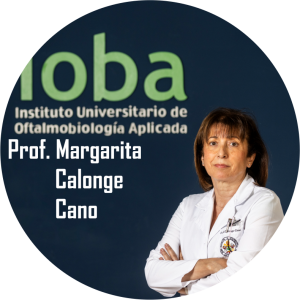
Ophthalmologist and Professor of Ophthalmology at the University of Valladolid. She is the director of IOBA, coordinates the Ocular Surface Group and focuses her clinical and research activity on ocular surface diseases, inflammation and chronic ocular pain and advanced cell therapies, with significant clinical transfer of her research.
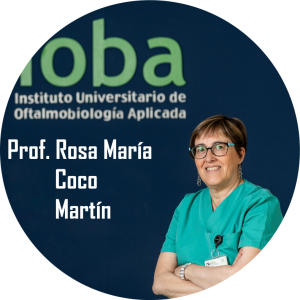
Ophthalmologist and Professor of Ophthalmology at the University of Valladolid. She coordinates the Retina Group and focuses her clinical and research activity on inherited and degenerative retinal diseases. She leads competitive projects, clinical trials and technology transfer activities, and maintains close collaboration with patient associations.
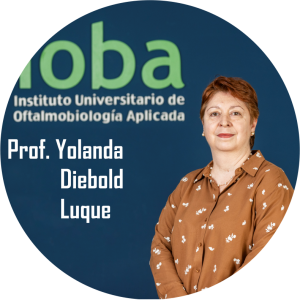
Biologist and Professor in the area of Ophthalmology at the University of Valladolid. She coordinates the NANO-SOS-4EYE Group and focuses her research on tissue engineering and nanotechnological solutions for ocular functional recovery, with a special focus on inflammation. She leads competitive projects, collaborates with companies and is co-inventor of patents, thus promoting patient-centred translational research.
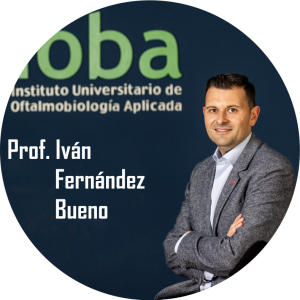
Veterinarian and Associate Professor in the area of Ophthalmology at the University of Valladolid and Head of Research at the Unit of Excellence IOBA. His research focuses on advanced therapies, neuroprotection and regenerative medicine applied to retinal diseases, as well as on the safety assessment of ophthalmic medical devices. He leads competitive projects, collaborates with companies and is co-inventor of patents, promoting translational research aimed at the development of innovative solutions with potential clinical application.
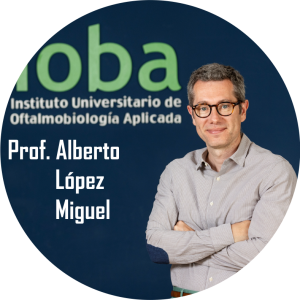
Optician-Optometrist and Professor of Ophthalmology in the area of Ophthalmology at the University of Valladolid. His research focuses on the ocular surface, refractive surgery and visual quality. He develops health technology assessment projects to analyse how scientific advances can be translated into diagnostic and therapeutic improvements.
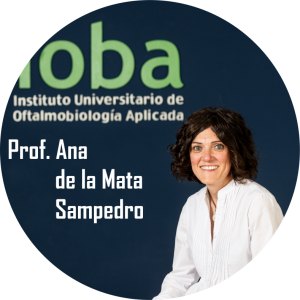
Biologist and Assistant Professor of Immunology at the University of Valladolid. Her research focuses on improving advanced therapies for ocular surface regeneration.

Biologist and Biochemist. Permanent Lecturer in the area of Cell Biology at the University of Valladolid. Her research focuses on advanced therapies and stem cell-based regenerative medicine, with a translational approach aimed at the treatment of inflammatory diseases of the ocular surface.