


Area 2.
Biomarkers, Inflammation and Neuroprotection
At the Unit of Excellence IOBA, we investigate the biological and molecular mechanisms involved in inflammatory, neurodegenerative and complex eye diseases, with the aim of improving their diagnosis, monitoring and treatment. This area addresses conditions such as proliferative vitreoretinopathy, dry eye disease, discomfort associated with contact lens use and neurodegenerative diseases of the retina.
Our work focuses on identifying and validating biomarkers that help diagnose these conditions, assess their severity and activity, predict their evolution and better guide therapeutic interventions. We also study the etiological and biological factors that explain why certain symptoms appear or why some patients show a different course for the same disease.
In addition, this area explores new neuroprotection strategies in retinal pathologies, including the possible usefulness of drugs already used for other medical purposes. Taken together, these investigations seek to advance towards more precise, preventive and personalised ophthalmology.

Inflammatory biomarkers on the ocular surface
We work on the discovery and validation of molecular biomarkers in tears and conjunctival epithelial cells which can improve the diagnosis and treatment of chronic inflammatory diseases of the ocular surface. These include dry eye disease, ocular graft-versus-host disease, severe ocular allergies, limbal stem cell deficiency and pathology associated with contact lens use.
This line combines in vitro models with clinical studies and patient samples, in order to identify new potential therapeutic targets and to better understand the underlying inflammatory mechanisms, so as to translate scientific knowledge into more precise diagnostic and therapeutic tools.
Chronic ocular pain biomarkers
This line focuses on the study of chronic ocular pain, which is often associated with dry eye disease and/or the postsurgical period. In this area, IOBA works on the identification of biomarkers that help to better characterise this problem and on the analysis of the pathophysiological mechanisms underlying it.
We work towards a more precise diagnosis and the development of personalised and precision therapeutic protocols better tailored to each patient, in a context in which pain, inflammation, symptoms and clinical course do not always correlate directly.
Retinal biomarkers and precision medicine
We work on the validation of biomarkers associated with proliferative vitreoretinopathy, both to estimate the risk of developing this condition and to anticipate functional outcomes. Research includes clinical, imaging — such as OCT, OCT-A and autofluorescence — and genetic biomarkers, with special focus on the identification of novel risk markers.
This research line also involves projects oriented towards precision medicine and advanced diagnosis in degenerative and inherited retinal diseases (IRDs), such as pathologic myopia or Stargardt disease. In these pathologies, we use genetic and imaging biomarkers, together with analysis tools based on artificial intelligence, to work on improved diagnostic stratification and a better understanding of variability between patients
Neuroprotection in retinal diseases
We are exploring new strategies to help preserve the structure and function of the retina in neurodegenerative diseases, as well as the therapeutic potential of repurposing drugs used in other medical contexts.
The final aim of this research line is to expand treatment options in pathologies in which preventing and/or slowing down neuronal damage may be key.

Pablo Arlanzon-Lope, Miguel Angel Campos, Ivan Fernandez-Bueno, Rosa M Coco-Martin. Does PLEX® Elite 9000 OCT Identify and Characterize Most Posterior Pole Lesions in Highly Myopic Patients? J Clin Med 2023 Feb 25;12(5):1846. (doi: 10.3390/jcm12051846)
Alberto López-de la Rosa, Juan J Telleria, Manuel Posada de la Paz, Isabel M Hermosilla-Gimeno, Miren Agurtzane Rivas, Raúl Gilabert, Rosa M Coco-Martín. Clinical and genetic characterization of patients with eye diseases included in the Spanish Rare Diseases Patient Registry. Orphanet J Rare Dis 2024 Jun 13;19(1):234. (doi:10.1186/s13023-024-03242-6)
M Mateos-Olivares, E M Sobas, K Puertas-Neyra, M I Peralta-Ramírez , R González-Pérez , J Martín-Vallejo , C García-Vázquez , R M Coco , J C Pastor, S Pastor-Idoate, R Usategui-Martín. Hair cortisol level as a molecular biomarker in retinitis pigmentosa patients. Exp Eye Res 2022 Jun:219:109019. (doi:10.1016/j.exer.2022.109019)
Cristina Valencia-Sandonís, Andrés Ángel Calderón-García, Marta Blanco-Vázquez, Laura Valencia-Nieto, Andrea Novo-Diez , Amanda Vázquez , Margarita Calonge , María J González-García, Amalia Enríquez-de-Salamanca. Long-Term Clinical and Molecular Changes in Dry Eye Disease and Chronic Ocular Pain. Int J Mol Sci 2025 Sep 12;26(18):8918. (doi:10.3390/ijms26188918)
Ricardo Usategui-Martín, Kevin Puertas-Neyra, Nadia Galindo-Cabello, Leticia A Hernández-Rodríguez, Fernando González-Pérez, José Carlos Rodríguez-Cabello, Rogelio González-Sarmiento, José Carlos Pastor, Ivan Fernandez-Bueno. Retinal Neuroprotective Effect of Mesenchymal Stem Cells Secretome Through Modulation of Oxidative Stress, Autophagy, and Programmed Cell Death. Invest Ophthalmol Vis Sci 2022 Apr 1;63(4):27. (doi: 10.1167/iovs.63.4.27)
Ricardo Usategui-Martín, Kevin Puertas-Neyra, María-Teresa García-Gutiérrez, Manuel Fuentes, José Carlos Pastor, Iván Fernández-Bueno. Human Mesenchymal Stem Cell Secretome Exhibits a Neuroprotective Effect over In Vitro Retinal Photoreceptor Degeneration. Mol Ther Methods Clin Dev 2020 May 13:17:1155-1166. (doi:10.1016/j.omtm.2020.05.003)
Amanda Vázquez, Elena Martínez-Plaza, Itziar Fernández, Eva M Sobas, María J González-García, Amalia Enríquez-de-Salamanca, Enrique Ortega, Alberto López-Miguel, Margarita Calonge. Phenotypic characterization of patients developing chronic dry eye and pain after refractive surgery: A cross-sectional study. Ocul Surf 2022 Oct:26:63-74. (doi: 10.1016/j.jtos.2022.07.010)
Amanda Vázquez , Marta Blanco-Vázquez , Elena Martínez-Plaza , Eva M Sobas, María J González-García, Alberto López-Miguel, Enrique Ortega, Amalia Enríquez-de-Salamanca, Margarita Calonge. Corneal Sensory Changes and Nerve Plexus Abnormalities in Chronic Neuropathic Ocular Pain and Dry Eye Postrefractive Surgery. Am J Ophthalmol 2025 Aug:276:170-185. (doi:10.1016/j.ajo.2025.04.004)

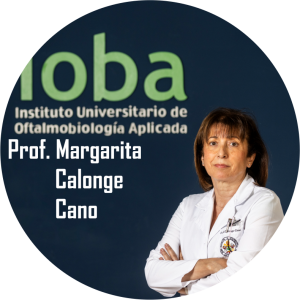
Ophthalmologist and Professor of Ophthalmology at the University of Valladolid. She is the director of IOBA, coordinates the Ocular Surface Group and focuses her clinical and research activity on ocular surface diseases, inflammation and chronic ocular pain and advanced cell therapies, with significant clinical transfer of her research.
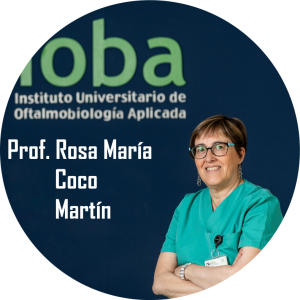
Ophthalmologist and Professor of Ophthalmology at the University of Valladolid. She coordinates the Retina Group and focuses her clinical and research activity on inherited and degenerative retinal diseases. She leads competitive projects, clinical trials and technology transfer activities, and maintains close collaboration with patient associations.
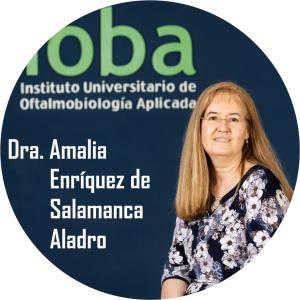
Biochemist and Distinguished Researcher at the University of Valladolid. She leads IOBA’s Research area and her research focuses on biomarkers in ocular surface inflammation and pain, molecular analysis of tear fluid and ocular epithelium in dry eye, ocular pain, ocular graft-versus-host disease and contact lens discomfort, with development of predictive models.
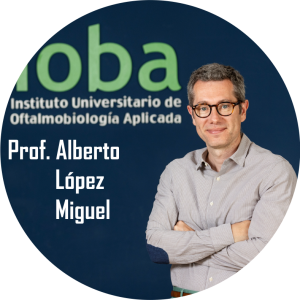
Optician-Optometrist and Professor of Ophthalmology in the area of Ophthalmology at the University of Valladolid. His research focuses on the ocular surface, refractive surgery and visual quality. He develops health technology assessment projects to analyse how scientific advances can be translated into diagnostic and therapeutic improvements.
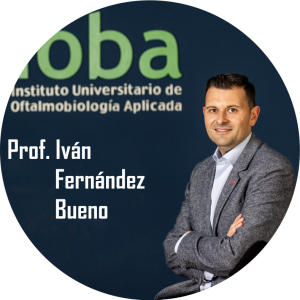
Veterinarian and Associate Professor in the area of Ophthalmology at the University of Valladolid and Head of Research at the Unit of Excellence IOBA. His research focuses on advanced therapies, neuroprotection and regenerative medicine applied to retinal diseases, as well as on the safety assessment of ophthalmic medical devices. He leads competitive projects, collaborates with companies and is co-inventor of patents, promoting translational research aimed at the development of innovative solutions with potential clinical application.
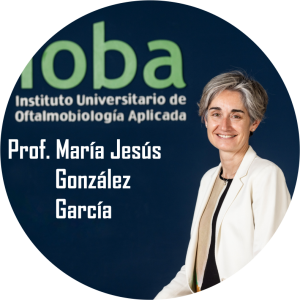
Optician-Optometrist and Professor of Optics at the University of Valladolid. Her clinical and research activity focuses on the clinical phenotyping of patients with dry eye, chronic ocular pain and contact lens discomfort, with the aim of identifying biomarkers that help diagnosis, monitoring and therapy assessment.
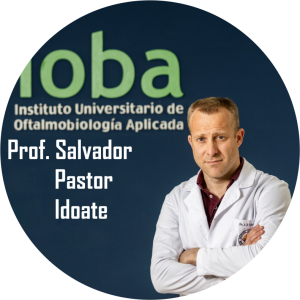
Ophthalmologist and Associate Professor of Ophthalmology at the University of Valladolid. His clinical and research activity focuses on retinal detachment and proliferative vitreoretinopathy, with special interest in genetic biomarkers, inflammation and neurodegeneration, and precision medicine strategies supported by artificial intelligence.

Biochemist and Associate Professor of Cell Biology at the University of Valladolid. His research focuses on the molecular characterisation of retinal neurodegeneration, with special attention to neuroinflammation mechanisms. He also works on the development of new therapeutic strategies for its prevention and treatment.