


Area 3.
Health Technology Assessment
At the Unit of Excellence IOBA, we also develop a research area especially close to the patient, focused on the assessment of health technologies applied to visual health. This work connects preclinical and clinical research to analyse the safety, usefulness and real-world applicability of new products, diagnostic tools and healthcare strategies in ophthalmology and optometry.
This area covers the whole pathway from the preclinical biocompatibility assessment of emerging medicines and medical devices to the clinical validation of technologies in real healthcare settings. It also includes the development of new diagnostic tools, the validation of biomarkers, and work towards advancing screening and telemedicine models aimed at early diagnosis as well as more accessible and efficient care.
In summary, the IOBA team does not only use diagnostic tools: it also designs new solutions, validates biomarkers, tests technologies in real clinical settings and advances screening and telemedicine models to diagnose earlier and better.

Preclinical biocompatibility assessment
IOBA’s activities are implemented under a specific platform for the biocompatibility assessment of ophthalmic medical devices, following the framework of ISO 10993 for the biological evaluation of medical devices. This structural capability makes it possible to analyse risks of cytotoxicity, ocular and mucosal irritation, sensitisation, as well as short- and long-term toxicity. This infrastructure is key for validating ophthalmic medicines and medical devices at preclinical stages before their use in patients.
Clinical validation of technologies and medical devices
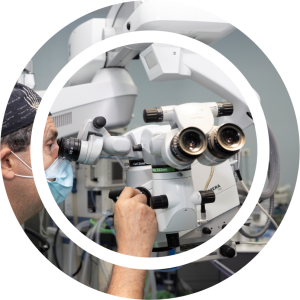
We work on the clinical validation of diagnostic technologies and medical devices in a highly specialised setting, where healthcare activity and research are closely connected. IOBA has a broad portfolio of diagnostic tests, including fundus photography, 3D OCT, autofluorescence and fluorescein angiography, which make it possible to detect early changes and support therapeutic decision-making. This line is not limited to the clinical use of existing tools: it also evaluates new diagnostic technologies, medical devices, contact lenses and lens care solutions, and has a track record of more than 60 clinical trials involving medicines, medical devices and advanced therapies in ophthalmology.
Screening and telemedicine for early diagnosis
We develop screening and telemedicine models that enable diagnosis beyond the traditional specialist consultation. IOBA has worked on early detection systems for pathologies such as diabetic retinopathy, including population screening programmes in collaboration with the public health system (Sacyl). These strategies seek to improve early detection, expand access to diagnosis and facilitate more efficient care, especially in pathologies in which identifying early changes can be decisive.

Rosa M Coco-Martin, Cristina Andrés-Iglesias, Girish K Srivastava, Javier Lagos-Rodriguez , Miguel Ruiz-Tevah, Mario R Díaz-Cárdenas, Iván Fernández-Bueno, Juan García-Serna, María T García-Gutierrez , Alfredo García-Layana, J Carlos Pastor. Intraocular toxicity caused by MEROCTANE perfluorocarbon liquid. Sci Rep 2021 Jan 12;11(1):599. (doi: 10.1038/s41598-020-79561-y)
Cristina Andrés-Iglesias, Iván Fernández-Bueno , Salvador Pastor-Idoate , Rosa M Coco-Martin, J Carlos Pastor. Ala®sil chemical characterization and toxicity evaluation: an example of the need for the Medical Device Regulation 2017/745. Front Pharmacol 2024 Jan 11:14:1310463. (doi:10.3389/fphar.2023.1310463)
Pablo Arlanzon-Lope, Miguel Angel Campos, Iván Fernández-Bueno, Rosa M Coco-Martin. Does PLEX® Elite 9000 OCT Identify and Characterize Most Posterior Pole Lesions in Highly Myopic Patients? J Clin Med 2023 Feb 25;12(5):1846. (doi: 10.3390/jcm12051846)
Iván Fernández-Bueno, Ricardo Usategui-Martín, José Carlos Pastor, Cristina Andrés-Iglesias. Ex-Vivo Method to Quantifiably Evaluate the Staining Effectiveness of Anterior Lens Capsule Dyes. Transl Vis Sci Technol 2021 Dec 1;10(14):17.(doi: 10.1167/tvst.10.14.17)
Iván Fernández-Bueno, Luis Ignacio Olcina, Cristina Andrés-Iglesias, Kevin Puertas-Neyra, Itziar Fernández-Martínez , Ricardo Usategui-Martín, Miguel José Maldonado-López. Safety, biocompatibility, and potential functionality of a new accommodative intraocular lens: An experimental study in rabbits. Heliyon 2023 Sep 1;9(9):e19604. (doi: 10.1016/j.heliyon.2023.e19604)
Girish K Srivastava, María L Alonso-Alonso, Iván Fernández-Bueno, María T Garcia-Gutiérrez, Fernando Rull, Jesús Medina, Rosa M Coco, J Carlos Pastor. Comparison between direct contact and extract exposure methods for PFO cytotoxicity evaluation. Sci Rep 2018 Jan 23;8(1):1425. (doi:10.1038/s41598-018-19428-5)

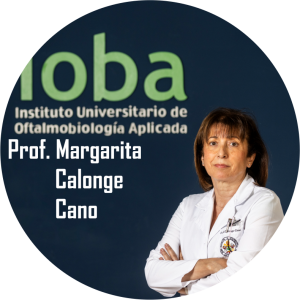
Ophthalmologist and Professor of Ophthalmology at the University of Valladolid. She is the director of IOBA, coordinates the Ocular Surface Group and focuses her clinical and research activity on ocular surface diseases, inflammation and chronic ocular pain and advanced cell therapies, with significant clinical transfer of her research.
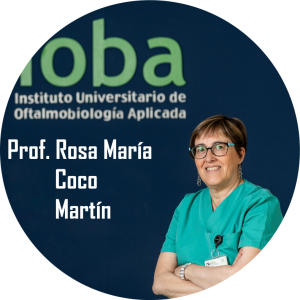
Ophthalmologist and Professor of Ophthalmology at the University of Valladolid. She coordinates the Retina Group and focuses her clinical and research activity on inherited and degenerative retinal diseases. She leads competitive projects, clinical trials and technology transfer activities, and maintains close collaboration with patient associations.
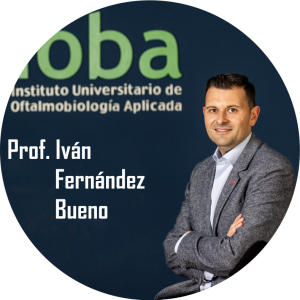
Veterinarian and Associate Professor in the area of Ophthalmology at the University of Valladolid and Head of Research at the Unit of Excellence IOBA. His research focuses on advanced therapies, neuroprotection and regenerative medicine applied to retinal diseases, as well as on the safety assessment of ophthalmic medical devices. He leads competitive projects, collaborates with companies and is co-inventor of patents, promoting translational research aimed at the development of innovative solutions with potential clinical application.
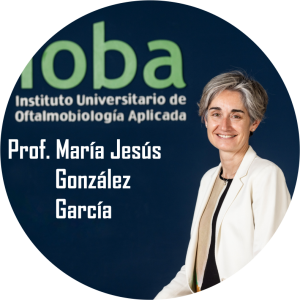
Optician-Optometrist and Professor of Optics at the University of Valladolid. Her clinical and research activity focuses on the clinical phenotyping of patients with dry eye, chronic ocular pain and contact lens discomfort, with the aim of identifying biomarkers that help diagnosis, monitoring and therapy assessment.
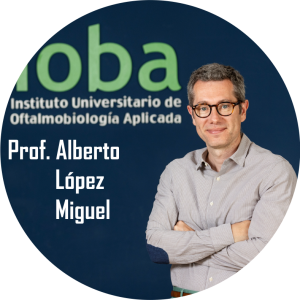
Optician-Optometrist and Professor of Ophthalmology in the area of Ophthalmology at the University of Valladolid. His research focuses on the ocular surface, refractive surgery and visual quality. He develops health technology assessment projects to analyse how scientific advances can be translated into diagnostic and therapeutic improvements.
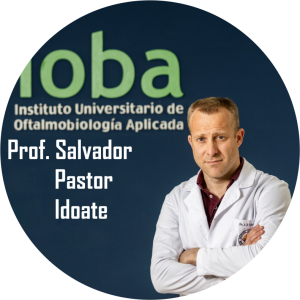
Ophthalmologist and Associate Professor of Ophthalmology at the University of Valladolid. His clinical and research activity focuses on retinal detachment and proliferative vitreoretinopathy, with special interest in genetic biomarkers, inflammation and neurodegeneration, and precision medicine strategies supported by artificial intelligence.